
An Overflowing Cup of Independence

Whether you call it soccer or football, there’s little doubt that, besides the Ted Lasso series, the 2026 World Cup being played in North America has perhaps done more to generate widespread American interest in the sport than anything else the last fifty years. I say this knowing full well there are still many who couldn’t be more disinterested.

Despite having never played competitively myself, I’ve half-expected and even silently rooted for this moment since a high school friend (and stellar athlete) shocked students and coaches alike when he broke from tradition to play futbol instead of football.

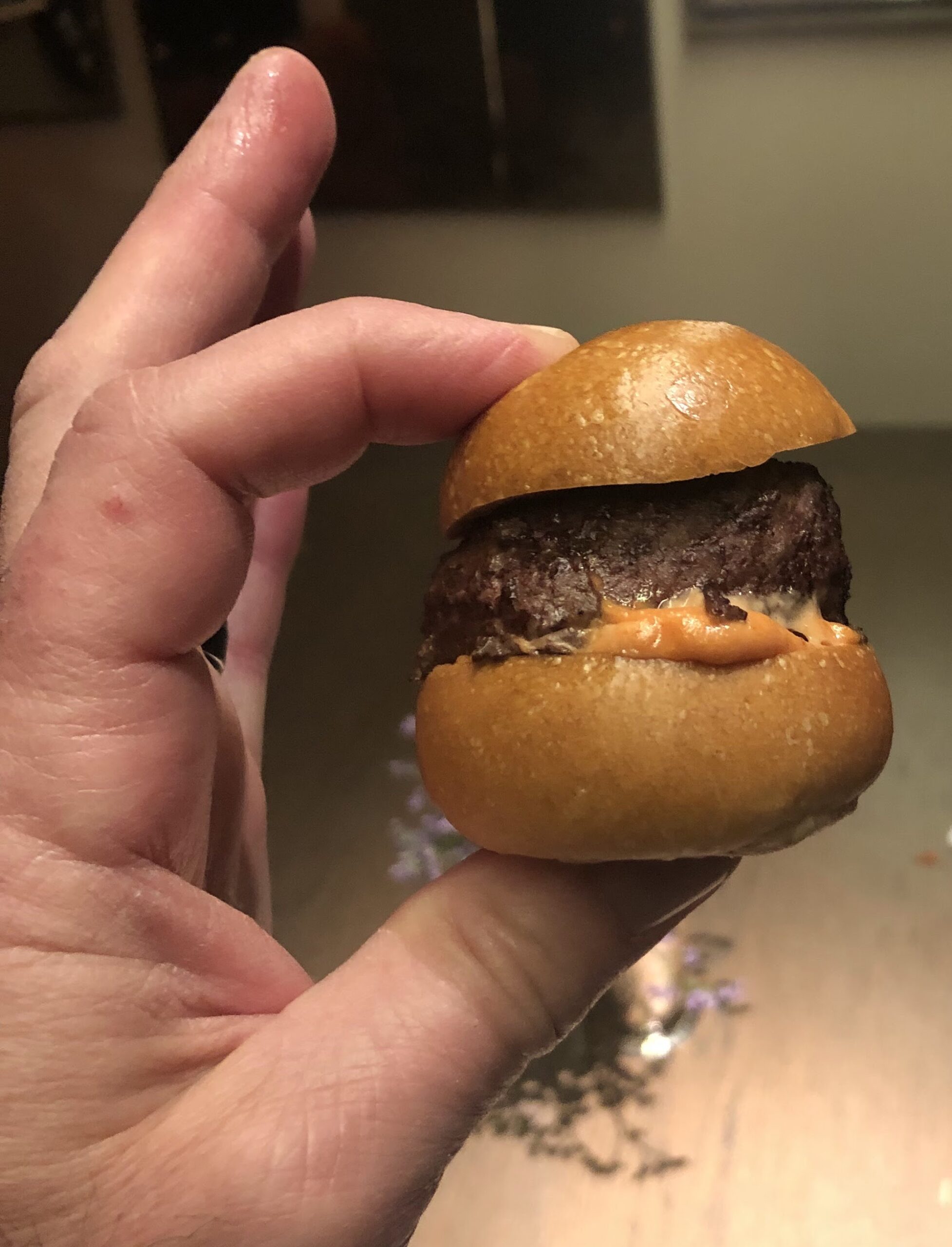
Sure, kicking a ball around is always fun. And coaching the kids when they were little in what I call beehive soccer (U6s buzzing the ball around the pitch like a swarm of bees) helped, too.

This image has an empty alt attribute; its file name is IMG_3866-768x1024.jpg

Okay, the ‘coaching’ title may be a stretch.

But watching one of my sons become a standout high school soccer player following his own departure from tradition, and more recently cheering on all three grandsons from a fold-up chair beside a miniature field (under much better coaching than I ever provided) has been pure joy. Traveling to dozens of countries around the world over the years where soccer is THE sport hasn’t hurt, either.

This image has an empty alt attribute; its file name is IMG_3935.jpg

So it’s no surprise that, like many others, I find myself caught up in this year’s World Cup. There’s a new excitement for this sport in America. I mean, it’s only taken 250 years! Okay, organized soccer as we know it is more a late-1800s thing, but you get it. And while the long hours and tireless work many good friends are putting in at North American venues keeping things safe and secure is not lost on me, this awakening has been great for the country, the sport, and the world!

Perhaps a different type of sleeping giant has been awakened.

With this renewed excitement for soccer in North America, maybe this is a good time to point out how less-than-excited Hollywood should be about all these new actors joining the guild after they leave the sport. Probably no coincidence the term flop is used both for terrible movies and what’s become a nauseatingly familiar sight on replays. But while the incessant over-dramatics is another analysis for another time, some observations here are timely and fit with the overall message.

I’m the first to admit I’ve missed the mark and fallen short more times than I can count. So if my points here seem harsh or hypocritical, know in advance that I recognize full well that I have more fingers pointing back at me than the one I’m pointing at others, and I see clearly the plank in my own eye while bringing attention to the speck in theirs.

Still, my least favorite aspect of the sport is professional athletes – grown men – writhing around on the ground in feigned agony, often after scarcely more than a shoelace brushed their leg. Even memes comparing LeBron James’ overdone tendencies on the hardwood to the antics on soccer’s premier stage are spot on.

No one is fooled by your shenanigans.

Ouch, that truth bomb detonation is a little close to home. Maybe it works more than it should in soccer as a way to make sure the official didn’t miss something; a shameless attempt to influence. And while there are certainly times it’s not an act (the snapped lower leg of Canadian player Ismaël Koné; the bloodied head of Netherlands’ Jan Paul van Hecke), the scale is heavily tipped toward feeble attempts at distraction, winning undeserved favor, or deflecting responsibility. If it were egregious enough, you’d think it would be called regardless.

It’s worth pointing out that despite sustaining actual and significant injuries, neither of the men above exaggerated their interaction.

In quietness and confidence shall be your strength. – Isa 30.15

Maybe it’s about playing the game better. Cleaner. Leaving no doubt. Performing (not acting) so well there’s no room for contention. I could be wrong on this, and feel free to comment to the contrary, but in all the times I’ve watched the likes of Messi, Ronaldo, Mbappe’, or Haaland, I’ve seldom seen this shameless buffoonery. Get up, shake it off, persevere, play on. True professionals quietly and confidently do their jobs well.

And rest assured God isn’t fooled by excessive dramatics, flopping around, or blaming others for our problem(s), either. The truth is, we all need to play the game of life better. No amount of distraction or theatrics makes my life, leadership, fitness, or faith walk any better or easier.

The will to persevere is often the difference between success and failure. – Nicky Gumbel

Difficulties happen in life. A leg snaps in two; you get kicked in the head; you’re dragged down meters from the goal. A loved dies; you lose your job; your car breaks down; illness assails you. While terrible and nothing you’d wish on anyone, hardships are inevitable and often obvious. Seldom do those experiencing real pain or heartache feel the need to embellish it. But there is hope, and faith involves trusting that God’s purposes are greater than your limited understanding.

So, even when roadblocked by lackluster leadership, rampant favoritism, or horrible bosses…persevere. If you’re lied to, slandered, hurt, frustrated, or just can’t seem to catch a break…keep faith. Whether discouraged, heartbroken, openly battling health concerns, or silently fighting battles no one knows about… stay strong.

God may be working to change something within you before he changes what is around you.

I’m not afraid to admit there’s more going on in me than just a rekindled love of soccer. In fact, as I watched Iraq’s first World Cup 2026 match vs Norway, I found myself as much rooting for them as wondering what ever came of the Iraqi children I kicked the ball around with while serving there. Did any of them go on to play professionally? Am I watching one right now and don’t even know it? Do they still live there? Are they even living at all?

This image has an empty alt attribute; its file name is Soccer-1024x692.jpeg
This image has an empty alt attribute; its file name is Soccer2-1024x545.jpeg

Like my dad, I’m often pulling for the underdog. And of course I root for Canada, Colombia, Italy, and Curacao because of personal connections and wonderful friends I’ve made in those places.

I’m also rooting for us. Both the US national team AND the United States.

Nothing great is ever achieved without much enduring. – St Catherine of Siena

Two hundred fifty years ago, the men who made up the Second Continental Congress faced months of bickering, infighting, disagreements, dramatics, and much more. Yet they endured for a greater good and something larger than themselves: American independence. They persevered and paved the way for the freedoms we enjoy today and celebrate each July.

Yes, the United States celebrates a milestone this year, but God created the world for everyone. So with the timely help of the world’s most popular and accessible sport on its largest ever stage, I’m also rooting for the world right now. What better time than now for all of us to reflect God’s love through kindness, mutual respect, and appreciation for the human achievement on display at this international competition?

I challenge us to let the loyalty and zeal of soccer fans from across the world, on display this summer in North America, serve as a reminder of our founding fathers’ vision, passion, and perseverance 250 years ago.

And consider how we might similarly use our passions to help make the world a better place.

Get Strong. Be Strong. Stay Strong.

Changing The Gap Between Good And Evil

“There must be evil for there to be good.” – Course Attendee, Bogota, June 2024

I heard someone say at a recent training event that there are two things we all hate: change, and the way things are. Not only did I literally laugh out loud when I heard it, that statement is perhaps one of the all-time greatest representations of the human condition throughout history.

Here’s another one: the more things change, the more they stay the same.

At nearly every training event I now emcee, facilitate, or lecture at, I anecdotally refer to the human condition during my opening or closing remarks to illustrate how little things have really changed throughout history. It usually goes something like this:

1600s French artist Eustache Le Sueur’s painting The Rape of Tamar

I describe or project the above image and ask if anyone knows what painting it is. When no one responds, I explain it is an image of the painting The Rape of Tamar by 1600s French painter, Eustache Le Sueur. It likely represents the Old Testament biblical account from 2 Samuel 13 wherein one of King David’s sons, Amnon, raped his half sister, Tamar. Two years later, her brother, Absalom, exacts revenge on Tamar’s behalf by conspiring to murder Amnon.

At that point, I rhetorically ask whether anyone has ever read the Old Testament, and go on to point out that from the first recorded murder (Cain’s murder of his brother Abel out of jealousy), humans have consistently and unceasingly done terrible things to one another. Moses killed an Egyptian and buried him in the sand, and even King David, described as a man after God’s own heart, had Bathsheba’s husband, Uriah, killed to conceal their affair. In the Old Testament alone are recorded countless instances of rape, murder, adultery, incest, conspiracy, assassination, execution, and a host of other issues that yet persist.

What we face today, I summarize, is nothing new. Perhaps greater in prevalence and creativity, yes. And certainly we can now bring to bear greater tools, techniques, procedures, and scientific advancements with which to find truth. Yet in spite of all that, little has changed since the start of human history. As acquaintance, historian, author, and good friend of my dad, Michael Delaware, wrote in the introduction to his fascinating new book Victorian Southwest Michigan True Crime, “…it is not the instrument of murder that holds any consistency, but the sinister impulse behind the criminal act wherein lies the true evil.”1

Indeed, Michael.

As I return from my third trip to Bogota, Colombia, where I’ve been honored and blessed with the opportunity to teach alongside incredibly talented presenters and help deliver training to dedicated, professional investigators from Central and South America, all the above hits a little closer to home. For while I don’t consider myself resistant to change, neither can I say it’s not occasionally uncomfortable or that I always think it’s necessary. Sometimes change is good, but sometimes things work the way things are. As fellow USAF Chief Master Sergeant Kevin Slater’s leadership book by the same title suggests, sometimes ‘Old School is Good School.’ And while seldom is ‘Because we’ve always done it that way‘ the right answer to a leadership challenge, this out of control social experiment of a world could occasionally benefit from a bit more of the ‘old way’ of doing things. But if change is necessary, let’s change things for the better!

Change is inevitable; growth is optional.

If I’m being honest, I didn’t completely know where all this was going when I started writing it. Maybe you can tell. But comments during a panel discussion at the course in Bogota, which coincidentally involved a change in the agenda, got me thinking. The panel was a departure from previous events, and I took a chance by including is in the final agenda. I’ve seen it work during many military training events I’ve attended, and envisioned the programmed Q&A methodology encouraging more interaction. But I really had no idea how it would go over in this type of course.

Reaction was fantastic! The other panel members and I were delighted with the response. Attendees asked an impressive number of questions and provided insightful responses of their own with unexpected candor. It went so well, in fact, that we adjusted the schedule to accommodate a second panel the following day.

Perhaps somewhat providentially, it was the response to one of the questions I posed back to the group that prompted this essay.

It was a simple question: Why do you do what you do?

I framed it in the context of known and suspected dangers and challenges they face in carrying out their duties in that region. Some responded that it was a logical choice, coming from a family of public servants; others described it simply as their calling. I believe them; no matter the reason, everyone I’ve encountered throughout these courses voluntarily, professionally, and proudly serves with purpose, honor, and distinction. They persevere.

Do not be overcome by evil, but overcome evil with good. (Rom 12.21)

But as a man of faith, one answer struck me to the core: “There is much evil in the world. Yet there must be evil for there to be good. I (we) must be the good that overcomes the evil.”

I don’t know that I could add much more to that here, nor should I try. It was profound, heartfelt, and seemed to resonate with everyone in the room. So I’ll simply end as I started…with a quote.

Typically attributed to Edmund Burke, its true origin appears largely in question. Nonetheless, the message endures: “The only thing necessary for the triumph of evil is for good men to do nothing.”

I’m proud to have answered that call, and grateful for those who continue standing in the gap restraining evil in this world.

Get Strong. Be Strong. Stay Strong.

1Delaware, M. (2024). Victorian southwest Michigan true crime. The History Press.

The Parable of the Carafe

“Every organization in the world today should be teaching employees how to be extraordinary.” – Mark Sanborn

(Much of this was shared in an earlier social media post; I consider the lesson worthy of a full article)

Last month, I facilitated a training event in Kansas City, Missouri. It was a very busy week, as we simultaneously held a board meeting and strategic planning session that coincided with the first two days of the course. But with all that going on, with all the different information shared and discussed between all three events, perhaps the most important lesson of the week came neither from the classroom nor the boardroom, but rather in a most unexpected way.

Experience has taught me that classes the size of this one, with its audience type, require a near-steady flow of coffee with plenty in reserve. However, during Sunday evening setup, I noted that while there were plenty of supplies, the class would be limited to a standard three-burner Bunn with its respective pots; I had overlooked the need for carafes or an insulated beverage container.

It may seem like a small thing, but it bothered me. You know from my series on little things that they can mean a lot. And they often become big things. When nearly 100 people go on break simultaneously, particularly those conditioned or accustomed to caffeine dependence on the job, three pots run dry pretty quickly. And training directors are apt to get their brake lines cut.

Ok, that’s a little extreme. Perhaps just a few surly attendees and a critical review or two about having more coffee next time.

“Worry is a down payment on a problem you may never have.” – Joyce Meyer

My down payment increased greatly after striking out late Sunday evening in my attempts to find a street vendor selling insulated beverage containers. Not one to give-up quite so easily, I turned in with the thought that perhaps the hotel where I was lodged might have a stray carafe lying around. Conversely, thoughts of NOT finding a solution kept me up much of the night. In all honesty, I seldom sleep well the first couple nights in a new place, anyway. So I arose early Monday and headed downstairs.

Note: It’s important to mention before going any further that my hotel was not the training site, nor connected in any way to the other business mentioned above. In fact, it wasn’t even the contracted hotel for the course attendees!

Enter Imelda.

After lurking…I mean looking around a few common areas, poking my head into vacant meeting rooms, and asking the front desk yielded nada, I thought one last option might be the breakfast buffet area. Situated behind stately glass-panel French doors at the top of an impressive staircase, it was a beautiful dining space laid out opposite the glass-paneled arc of the building; overlooking adjacent buildings, the street below, and what’s known as the plaza area in the distance further down the hill.

Unfortunately, it was closed, wouldn’t open for a while yet, and I was crunched for time. Noticing a staff member through the glass on the other side of the locked door, I approached with a sheepish smile and tentative wave. I felt like a kitten scratching at the door to be let in, but probably looked more like some creep in a suit expecting not to wait for breakfast.

Clearly dressed as the host who would soon welcome actual customers in for a nice, hot breakfast, the woman on the other side could have easily gestured at the clock and turned away like many others would have done in that moment. Instead, Ms. Imelda kindly unlocked the door and allowed me to explain my dilemma…to which I did.

I asked if it would be at all possible to temporarily borrow some sort of beverage carafe until I could pick one up later in the day? She could have simply and understandably declined. Yet she didn’t. Instead, Imelda asked me to wait there before disappearing around the corner toward the kitchen. She returned shortly after with an insulated, vacuum-pump coffee carafe. There was no hesitation nor hint of pretension. Imelda simply smiled, said she was happy to help, and asked me to ‘just bring it back at the end of the week.’

Imelda saved the day. The week, in fact. Thank you Marriott Hotels and Kansas City Marriott Country Club Plaza for hiring wonderful people like Imelda. As a person of faith, I believe what David Jeremiah relates in his devotional The Upward Call that as God blesses us, we are “sent out into the world in order to be a blessing to others.”

I don’t know whether she holds the same beliefs I do, but Imelda certainly understands how to pay it forward and about being a blessing to others. I’m grateful and blessed to have met this wonderful human being.

“Only a life lived for others is a life worthwhile.” – Albert Einstein

The world needs more Imeldas.

Get Strong. Be Strong. Stay Strong.

Jeremiah, David (2015). The upward call. San Diego, CA: Turning Point.

Sanborn, Mark (2004). The Fred factor. New York, NY: Currency Doubleday. 

5th Annual Year in Review

As each year transitions to the next I find myself looking back as I look forward. Is it just me, or does it seem like the world continues drifting farther off the rails every year? There’s a future article in there somewhere, but I’m well overdue for what’s in front of me here.

Unless you’re new to following along, you know January is when I recap the articles, activities, and exploits of the previous year. While I’m grateful for some new opportunities, there were also added responsibilities, challenges, and the unexpected loss of loved ones early in the year that drove engagement here down. But I hope what I did share was meaningful, encouraging, inspiring, or entertaining to you in some way. It’s certainly enjoyable to me! So in continuance of this tradition of questionable value, please enjoy my fifth such year-in-review.   

Little Things Parts One (and Two)

After buying time with the previous year’s review, I promptly began 2023 talking about the important business of doing your business. Well, only in part. Resurrecting memories of the White Cloud toilet paper jingle ‘little things mean a lot’ helped introduce the subject of how little things in our lives can have a large impact. Consider the spark as to a wildfire or the rudder as to a ship. Consider that despite its small size, the human tongue has unrivaled power to equally uplift or destroy. Or how ostensibly insignificant words, incidents, decisions, choices, or (apparent) coincidences of the past are written seamlessly into the script of your life today…a phenomenon I dubbed incidental interconnectedness. The smallest act of kindness provides big comfort in the midst of pain. Getting out of bed and showing up every day; a positive attitude; giving compliments; gratefulness; treating people with dignity and respect; asking people how their day is going; saying “please”, “thank you”, “I love you”, and “how can I help” more often; holding hands; or sending handwritten notes and thank-you cards are other little things of enormity. A simple hug or touch can instantly reduce stress; words that may seem insignificant when given or received often have lasting impact, for better or worse; faithfulness in little things leads to faithfulness in much; and the smallest light can be seen in the thickest darkness. The real issue isn’t how much we have, but what we do with it. 

Be that light.

Unlikely Heroes: When Ordinary People Do Extraordinary Things 

It’s difficult to summarize this article or convey in brief the emotion contained within. While I recommend linking back to all of 2023’a articles, this one is especially best read in full. Two quotes from it will have to provide its summary here.

“There comes a special moment in everyone’s life, a moment for which that person was born. That special opportunity, when he seizes it, will fulfill his mission – a mission for which he is uniquely qualified. In that moment, he finds greatness. It is his finest hour.” – Winston Churchill

“True heroism is remarkably sober…It is not the urge to surpass all others at whatever cost, but the urge to serve others at whatever cost.” – Arthur Ashe

You Are Enough Part One (and Two

“God often spends years preparing us for what he wants us to do….don’t be impatient with yourself.” – David Jeremiah

These two are likewise hard to condense. I did little compulsory introspection into the impact my past may have had on preferences, behavior, life and career choices, and responses to other situations in an effort to answer those and other ‘whys’; the most obvious of which is having spent most of my life believing I’m not handsome enough, good enough, desirable, or strong enough. And trying in some way, every step of the way, to prove that I am. 

In addition to examining the potential source of some of these long-term hangups, I also lamented time I wasted not being the man God intended me to be. I then found myself wondering whether it really was all wasted time, or part of a some master plan to prepare me for where I am today. The answer appears to be “yes”.

Part Two examined why many of the steps I took along the way to make myself feel better about myself were completely unnecessary. Instead of worrying what people think of me, I now try hard (not always successfully) to use the good, bad, and ugly of my life, career, and experience to bring me closer to God, help others, and make the world a better place. The key to this two part self-examination was this: Stop stumbling over things already behind you. You are enough. Be confident in who you are and to whom you belong.

“I am not what I ought to be. I am not what I wish to be. I am not what I one day will be. But, by the grace of God, I am not what I once was. – John Newton

Make Time to Train 

Things had been pretty heavy the last few articles, so a rail trip I took to Oklahoma City provided inspiration for something a little less weighty. This brief foray into lighter fare gave merely a glimpse into why I love traveling by train whenever possible. The chance to use this timely double entendre was just bonus: “When you say you don’t have time to train, what you are really saying is that you’ve chosen not to train.” – Arnold Schwarzenegger

I encourage you to get on-board and see for yourself.

Those Who Can

As someone who has historically done a lot of speaking and teaching, the pejorative statement “Those who can, do; those who can’t, teach.” has always been offensive to me. This article serves as a rebuttal directed at those who carelessly spew that sentiment, and a defense of those it’s typically directed toward. Because those who can do both!

A Full Cast of Characters

Humans are interdependent. From the beginning God said it’s not good for man to be alone.  Life and leadership are about helping others be successful. Others help us to be our best and prevent loneliness and isolation. Perhaps this statement sums it up best: the strength of the whole is greater than the sum of the parts. “The main ingredient of stardom is the rest of the team.” – John Wooden

Fitness remains an important facet of this motivational ministry and my life. On top of my ongoing daily commitment to doing my age in squats and pushups, regular strength, flexibility, and cardio workouts continue. I’ll use an upcoming article to chronicle that and inspire you to the importance of continued wellness.

The year ended with a significant health scare and emergency surgery for my father, and a skin cancer diagnosis requiring surgery of my own. Still, there’s much to be grateful for, not the least of which is your continued interest, support, and encouragement. I’m looking forward to another great year working together with you to make the world a better place.

Let’s do more in 2024!

Get Strong. Be Strong. Stay Strong.

A Full Cast of Characters

“The main ingredient of stardom is the rest of the team.” – John Wooden

Listen to the audio version here.

During a recent service, my pastor quoted Charles Spurgeon: “Scripture frequently sums up a man’s life in a single verse.” I’ve thought a lot about what single verse might sum up my life. While many could easily apply, like Ephesians 3.8 (I am less than the least of all the Lord’s people), one perhaps fits best: “Christ Jesus came into the world to save sinners – of whom I am the worst.” (1 Tim 1.15)

Look, it’s not a competition; no one wins at sin. But I fall short a lot, and the closer I get to God the more obvious and uncomfortable my unworthiness is. So I place myself at the top of the list. And like anyone in uncomfortable situations, I have a couple of choices: distance myself or draw closer. While the tendency for most is to disconnect, for the person of faith it should be to draw near to God and surround ourselves with others who make us better people.

Life and leadership are about helping others be successful.

“Any man’s death diminishes me, because I am involved in mankind.” (John Donne) While there’s something to be said for independence and alone time once in a while, no man is an island. Humans are interdependent. From the beginning, God said it’s not good for man to be alone. Pets are great, but we need companionship with others like us…with intellect, ethics, emotions, spirituality. Besides, pretty much everything in life requires some level of teamwork: leadership, business, sports, relationships. A widely shared passage in Ecclesiastes (4.9-12) reminds us that two are better than one and a cord of three strands is not easily broken. Not only can they help us be our best, other people help prevent loneliness and isolation. One only need consider the devastating emotional effects many experienced during the pandemic lockdowns to understand this truth.

But not every friend is a good one, nor every team a winner. A friend loves at all times, not just when you’re with them or have something to offer. And even teams with the greatest all-stars lose. The symbolism of that simple threefold cord helps us understand it’s better to have a few of the right players than an abundance of the wrong. A friends list or team roster stacked with the wrong people can lead to all sorts of trouble, but a GOOD team player and the RIGHT kind of helper is essential to success.

“It is not important what role you play, as long as you play your role.” – Don Denyes

Have you ever watched the credits roll at the end of a show? They seem to run forever and list literally hundreds of cast and crew. Few are the ‘stars’. As I write this article, final rehearsals are taking place for a stage production I’m involved with. Like most, I play a very small role. Yet having experienced a fair amount of theater (and a couple of film productions), I can tell you that it takes the entire cast and crew to be successful. Contrary to pop news, it’s the collective excellence of the set, sound, and stage crews, minor characters, and company performers that make or break a show. Of course the right leads are important, but even a momentary loss of character or focus by a supporting role upstage is immediately noticeable and often what keeps an average production from being exceptional. Every member of the cast and crew must be bought in, committed, support one another, and work seamlessly together throughout – keeping always the best interest of the show and team at the forefront; even if that means not being the center of attention.

For me, home projects are another example of my need for others. I take pride in being good at a number of things, but certain handiwork is not generally among them. Sure, given enough time and do-overs I can generally muddle through, but the results are more akin to ‘That’ll work.’ than ‘Wow, that looks amazing.’ And while I have no trouble running a saw, tape, or hammer, it did once take me two tries to install a cat door. The result was convenient floor and ceiling access for what I thereafter referred to as our circus cat. Note: when you remove a door for such projects, remember which end is which (that’s just one of many examples from life in the unskilled trades). Had I just asked for a little help…

Disposition is everything when it comes to teamwork.

There are many more examples of our need for relationships and teamwork in life. We simply can’t do life alone, so the virtues of humility, respect, and the ability to relate to others are invaluable.

John Maxwell points out in his book The 360 Degree Leader, “Leadership is more disposition than position.” The same is true of teamwork. Leading, following, asking for help, and helping others all require an unpretentious disposition. Humility is the antithesis of pride and self-service, which in turn are contradictory to being a great leader, teammate, and friend. It’s a small man who neither offers nor asks for help, and who runs down others to boost his own fragile ego. Yet ironically, it is the same man’s inflated ego and self-serving disposition by which humility and vulnerability escape him. While people with these traits make poor leaders, teammates, and friends, it may simply be that they lack emotional intelligence; particularly empathy and self-awareness.

So what does this have to do with the rest?

The strength of the whole is greater than the sum of the parts.

We all have issues. Humans are imperfect. Teams are a collection of individuals, therefore likewise imperfect. In his book The Ideal Team Player, Patrick Lencioni focuses on team members individually improving on “…the virtues that make him or her more likely to overcome the dysfunctions that derail teams.” This not only applies to the pretentious egotist mentioned above, it translates to all areas of life. Looking within and without, individually and collectively, we can make the world a better place by making each other better. It’s ok to be broken, but we’re still better together than apart!

Nicky Gumbel shared this from Desmond Tutu recently: ‘The solitary human being is a contradiction in terms…[W]e are made for complementarity. We are created for a delicate network of relationships, of interdependence with our fellow human beings…’ Adds Gumbel, “God does not intend for you to be lonely and isolated.”

We were created with an enduring need for others and a relationship with God. He gave us an important and obvious example in sending his son to share in our humanity, without whom salvation is impossible.

The show must go on…work hard to live at peace and encourage one another.

Get Strong. Be Strong. Stay Strong.

John Donne prose retrieved from: https://www.poemhunter.com/poem/no-man-is-an-island/

Lencioni, P. (2016). The ideal team player. Josey-Bass. 

Maxwell, J. C. (2011). The 360-degree leader. Thomas Nelson. 

Make Time to Train

“When you say you don’t have time to train, what you are really saying is that you’ve chosen not to train.” – Arnold Schwarzenegger

As I think about favorite settings and scenes from movies, those involving trains are nearly always near the top of my list. Adventure. Romance. Mystery. Intrigue. Think James Bond, Ethan Hunt, and most any Jackie Chan character in a running gunfight atop one and narrowly dodging an approaching tunnel, signal mast, or opposing locomotive as they brawl; Murder on the Orient Express, Silver Streak, Bullet Train, and practically any of the great westerns fit. Some of the zaniest Three Stooges bits were aboard trains, and the New Year’s Eve journey in 1983’s Trading Places is still a favorite scene from that comedy classic. Even Rowling’s Hogwarts Express and the animated Polar Express sate fascination.

Long before Tickle Me Elmo, Pokemon, and everything super-hero, train sets of all types were wish list toppers for many youth, perhaps due in part to their surprising detail. I’ve always been impressed at the realism and intricacy of model layouts, and enjoy discovering when a local diner still has a replica rail system circuitously routed around its upper walls. As with the hobbyist’s impressive layout, I find myself easily lost to imagination watching it complete its circuit over and over; and admittedly more disappointed than I should be when one is rendered little more than a dusty, neglected static display.

Am I the only person who still delights in watching locomotives circle the ceiling of a restaurant, rumble through town, or across the countryside? Or heartbroken there’s no longer use for a working caboose?

I credit my dad and growing up in a rail-heavy area with sparking this preoccupation. Not only did my dad once take me to visit a friend who operated a now obsolete manual switching station (pictured), he also took me and my siblings on the Amtrak from Battle Creek to Chicago! From visiting the museums to eating downtown at Wimpy’s (namesake of the mooching Popeye character who would ‘gladly pay you Tuesday for hamburger today’), a lifetime of memories were made.

So, too, a lasting draw to trains and travel on board.

Photo credit michiganrailroads.com (Charlie Whipp)

Excluding the work of porters, conductors, spies, villains, action-heroes, and mustached monocle-wearing super-sleuths, taking the train successfully reduces life to a slower pace. I don’t mean to overstate the obvious, but rail travel takes patience. Excluding commuters, if you’re in a hurry to get to there, you’re probably not planning to take a passenger train. Rail travel preloads patience through expectation management; you expect it to be leisurely and afford time and attention ordinarily devoted to driving, backseat driving, or jockeying for position on the shared armrest be given to other things. Perhaps that mental break and relaxed pace are precisely why to consider this method of travel.

Historically (and quite necessarily) on time, there’s added benefit in yielding to the compulsory predictability of the rail system’s timepiece. Even when rare delays occur along the way, programmed pauses to refuel, restock, or change crew afford abundant liberty unto an on-time arrival. In fact, I’ve often found the generous space, independence from watching the road, and freedom to move about particularly advantageous to business travel. For instance, as a senior enlisted leader I sometimes traveled by train when making unit visits. Because those trips didn’t involve me driving, bouncing around in a helicopter, or cramped on an airplane, I used time onboard to work on presentations and award packages; write commendations, performance reviews, or speeches; respond to email; review expectations and visit itinerary; catch up on reading; or even sneak a power nap.

An added bonus was a unique opportunity for informal mentoring.

As the nearest depot was usually some distance from base, I would ask that the unit choose one or two junior enlisted or company grade officers to receive me. Not only did this bless me with the opportunity to meet people I usually hadn’t met before, it also provided uninterrupted windshield time to discuss personal life, family, professional and educational goals, and gain insight into what was going right, where I could improve, and how the organization and I could best help them reach their goals.

Even business travel is a pleasure by train.

There’s a measure of comfort found in steadfast onward locomotion. No wrong turns, flat tires, road rage, or traffic signals. Notwithstanding the occasional jolt, jerk, rattle, or shake, there’s something mesmerizing about the sway and steady rumble of these diesel behemoths lumbering along their predetermined route. Proximate, yet temporarily absent a world they now spectate, riders are contained comfortably within a sort of rolling theater, where similar performances can be seen with passage through any given town: wreckers hooking wrecks, hookers catching looks, dogs walking walkers, and cops nabbing crooks. Lights, signs, signals, and lanes…how much better to be on a train?

A lot better.

Temporarily furloughed from the tyrannical spin of the clock and busyness of life, passengers enjoy an ever changing landscape. There’s freedom to spread out, move about, relax, or pay a visit to the club car where food, drinks, card games and conversations are readily available. While not always possible or necessary, a private room can add much to the overall experience which includes dining, additional privacy, a bed to sleep in, and other things impossible to enjoy by airplane, bus, or automobile. Such as kicking off your shoes for an evening glass of wine after an excellent meal in the dining car, perhaps followed by a relaxing read as dusk settles into the picturesque landscape rolling by outside; or enjoying daily quiet time while dawn breaks through the curtains and sunbeams dance gracefully across haystacks, two-tracks, and steel-roof shacks…as waking travelers, enticed by hot coffee and a fine breakfast, emerge their berths ready for another day’s travel.

Any wonder why it’s my favorite way to travel?

In his book A Gentleman in Moscow, Amor Towles’ main character astutely notes that “a man must master his circumstances or otherwise be mastered by them.” The same principle appears in Arnold’s opening quote, though contextually related to fitness: you don’t find time, you make time.

Taking time to share some lighter fare has been fun, but provided merely a glimpse into one of the truly enjoyable ways I make time to master my circumstances whenever possible. I encourage you to get on-board and see for yourself.

Make time to train.

Get Strong. Be Strong. Stay Strong.

Towles, A. (2016). A gentleman in Moscow. Penguin Books. 

You Are Enough (Part Two)

“With God’s calling comes a time of preparation, and preparation requires patience.” – David Jeremiah

I do my daily devotionals using the YouVersion Bible app, typically choosing a plan to go through the Bible in a year. This year, I chose English clergyman Nicky Gumbel’s classic Bible in One Year commentary, where each day he and wife Pippa provide insights and real-life application related to that day’s chapters. In a recent reading, Nicky paraphrased John Newton (former slave trader turned abolitionist and author of Amazing Grace), which seemed an appropriate way to start:

I am not what I ought to be. I am not what I wish to be. I am not what I one day will be. But, by the grace of God, I am not what I once was.’

It’s not easy to breakdown years of formulas that equal the sum of one’s thought patterns. In many ways I still struggle with the esteem issues mentioned in part one, but time has afforded a measure of clarity to some of those ‘cognitive distortions’. For instance, I’m certain one of the reasons I’m so neurotic about my appearance or bothered when my hair or nails get too long is rooted in sensitivity and embarrassment from childhood. My lifelong Schwarzenegger man-crush and near obsession with getting bigger, stronger, and faster no doubt originates from being a skinny, genetically unimpressive ‘late-bloomer’ who for years felt belittled and powerless to do anything about it. I don’t know if it hurt or helped that he once said, “We all want to look good…to stand naked in front of a mirror and be pleased with what we see. And of course, have others be pleased with what they see when they look at us.” I’ve spent decades lifting and exercising fanatically to feel good about the way I look, with or without clothes on. I was almost 50 before I got there, and it didn’t last long.

But I digress…

I’m sure at least part of my early lean toward public safety was influenced by esteem for which those in uniform were once held, followed by recognition that military and civil service provided not only structure, discipline, challenge, and esprit de corps, but also fulfilled all five of Maslow’s needs in my life at the time. I worked tirelessly at every level to be the absolute best I could be. It became a work ethic I am proud of, yet I sometimes wonder if it was approval, adoration, acceptance that subconsciously drove me? High performance and high achievement often equal borderline workaholism, and a price was sometimes paid in time I’ll never get back.

Yet there is nobility in helping the helpless and standing up for those unable to, which I’m sure my doc would also affirm was a subconscious manifestation to overcome runt status and somehow prove myself worthy.

What better way to prove oneself worthy than to try being everyone’s knight in shining armor?

But even the knight in shining armor’s sword can be double-edged. For in trying to be everything to everyone, we sometimes feel obliged to rescue those not ours to save; or lose sight of the peace and beauty of our own kingdom while admiring the deceptive splendor of someone else’s.

While everyone responds differently to stress, hurt, or injustices in life and relationships, I’ve long held a tendency to take things more personally than I should. Sometimes subconsciously using that as an impetus, I’d mix it together with an elixir of past insecurity, pain, or self-consciousness and let it culture in the warped petri dish of my mind. Once the microorganism of self-pity was incubated, it gave birth to various forms of self-affirming, self-centered acting out. And while acting out may temporarily make us feel better, there’s almost always collateral damage.

Seldom does selfishness make others feel better.

I know a thing or two because I’ve seen a thing or two. And done a thing or two. There’s something to that mid-life crisis thing. Still, the impact of boys and their toys, shoring up tender egos with an ever-growing, never-enough array of gas powered machismo is pretty innocuous. More concerning is when dispositions change: when we become increasingly abrupt, less forgiving, decreasingly tolerant, and an even bigger jackass. Especially toward loved ones.

Then there’s all that other stuff we neither wish to talk about, nor have time or space for in this episode. Yes, the flesh is indeed weak. And perhaps a more godly man would be better at controlling his thought life, ‘fleeing youthful lust’, or being more of a red light than a yield sign. Yet in the context of this article, those like me whose perceived sum total from past experience (especially concerning appearance and desirability) long equaled a probability quotient of zero, finally ringing the hi-strike bell of self-confidence at the circus of life is a powerful boost. Combine that with a string of rejections, disappointments, or unfulfilled expectations and it’s a recipe for…another article.

But our past doesn’t have to control us. Joe de Cena, founder of the Spartan Race phenomenon, says “Bitching burns between zero and zero calories per minute, so there’s no sense complaining about your hardships.” He’s right. Examine your past, acknowledge its impact or influence, and move on.

Easy for me to say. I still have trouble accepting myself as ‘enough’, and my thought life is likely to hamstring me indefinitely. But understanding in whom to find identity and properly accredit self-worth will help avoid these pitfalls.

Stop stumbling over things that are already behind you.

Here’s why: nothing we face hasn’t first been integrated into God’s plan for our life. God does, in fact, work all things together for good to those who love him (Rom. 8.28). In the very next chapter, we’re also reminded that he can (and will) do as he pleases: “Does not the potter have the right to make out of the same lump of clay some pottery of noble purpose and some for common use?”

I’m definitely destined for the common use category. And I’m pretty sure I still identify as a lump of clay. But I know God is in whom to find value and meaning for my life, and he’s still molding me into the man I’m intended to be…despite my best efforts to torpedo his artistry.

Yes, I’ve been too long concerned with my physical appearance and what others think of me. God made me and accepts me as I am. Does that leave me free to let myself go? Of course not. Even though I have stopped shaving and mostly wear sweatpants in retirement, I still need to care for this vessel he’s using. I can’t be renting out a ramshackle cottage, crackhouse, or Fancy’s one room, rundown shack on the outskirts of New Orleans. I need to maintain a strong foundation; keep my windows clean to let the light shine in; and stir the bats of defective thinking out of my belfry.

I’ve wasted much time concerned with what people think of me, focused on the wrong things, or thinking I’m not enough. Nicky Gumbel suggests that dealing with the challenges we face doesn’t prevent us from doing the ministry God called us to, but perhaps that’s actually the ministry itself. So instead of attributing things in my past to my own dysfunction, I’ll try adjusting my paradigm thusly: I’m using the good, bad, and ugly of my life, career, and experience to bring me closer to God, help others, and make the world a better place.

You want to be a great leader, friend, and human? Get outside your comfort zone; own your mistakes, get over yourself, and stop deflecting or blaming others for your shortcomings. A few apologies might be good, too.

You are enough. Be confident in who you are and to whom you belong.

Get Strong. Be Strong. Stay Strong.
De Sena, Joe (2014). Spartan up. New York, NY: Houghton Mifflin Harcourt.

https://bibleinoneyear.org/en/

Little Things (Part Two)

Part One of Little Things included an example from my own life where, viewed in hindsight, seemingly insignificant, unrelated events interconnected. Unlike most so-called reality shows, they were not scripted. Neither were they happenstance. I believe what many consider coincidence is instead divine providence: God composing a beautiful symphony from the good, bad, and ugly noises we make on our instruments of free will. He may not assemble the orchestra as quickly or painlessly as we prefer, but good things take time.

Anything worth having is worth waiting for.

Not long ago a former recruit emailed me with whom I hadn’t communicated for decades (portions removed for brevity). 

“I can’t believe it has been over 20 years. Defensive Tactics was my absolute favorite class. I still remember all three of my boxing matches. After my third match, I was pretty angry and disappointed that I couldn’t get many punches in. I had taken a lot of hits and refused to be knocked down. You knew I was not happy about it and afterwards and I told you “I sucked”. You grabbed my headgear, looked me in the eyes, and told me I had done a good job. I will always remember that day. Thank you.”

“You did a good job.” Five little words I don’t even remember saying. But she remembers.

Another former recruit was recently honored for exceptional community service. It was a big deal, not just because of the award, but because it almost never happened. Several years ago, a friend contacted me after a dubious roadblock removed his niece from hiring consideration. I researched exceptions and made some calls. Little things that cost nothing but a few minutes of my time helped ensure a now decorated public servant’s dream career wasn’t derailed before it began.

Looking back, it’s gratifying to realize some of those small words and actions made a difference. I didn’t purposely say or do things over the years just so I’d have something cheeky to write about someday. Kindness and helping others is important, and while I mess up plenty, I care about people and genuinely want to make the world better.

The biblical account of a pretentious teenager sold into slavery by his jealous brothers reinforces this concept. Despite entering Egypt a lowly slave, Joseph remained faithful to God, matured, saved an entire nation from famine, and eventually became second only to Pharaoh. But only after being falsely accused, imprisoned, forgotten about, and proving himself trustworthy in lesser jobs first.

Faithfulness in little things leads to faithfulness in much.

That’s a pretty solid recipe for success: start at the bottom, prove yourself trustworthy and capable in the little things, and work your way up.

Today the inexperienced, entitled, or unqualified favorites often ascend to leadership having seldom stayed long enough to master one assignment before moving to the next. They bypass little things like developing core competence or emotional intelligence; learning to be a good team player; understanding their own need for professional development and self-improvement; or showing diligence in even the lowliest assignments.

Too many expect too much having done too few of the little things.

As the founder of Spartan Race enterprise Joe De Sena says, “Instant success imparts nothing of any real or lasting value.”1 Ignoring little things can lead to horrible bosses and systemically poor organizational leadership. It can also spell failure in areas from fitness and finances to relationships and rockets. Just ask any orthopedic surgeon, bankruptcy attorney, therapist, or NASA O-ring engineer.

There’s a reason great coaches spend time on the small stuff.

I’ve written before about incremental improvements. Babies crawl before they walk; regular walking leads to better health; progressively adding pounds in the gym increases strength; progressively losing pounds on your body helps you reach a healthy weight; spending more than you make leads to financial ruin, but saving a little each month and paying off debt leads to financial peace; a little prayer and time in God’s word each day grows faith; and faith the size of a mustard seed can move mountains. (Matt 17.20)

Putting little things before the big things can make the big things a little easier.

For instance, before ascending the marriage mountain, a little dating and courtship may uncover some not-so-little-idiosyncrasies that would otherwise torpedo a relationship before the honeymoon is over. Regular oil changes, proper tire pressure, tune-ups, cleaning, washing, waxing, and other preventive maintenance prolongs the life of your car and help avoid costly breakdowns. Uncle Sam’s similar important little things are known by terms like gig lines; spit and polish; inspection ready; good order and discipline; clean, dry, and serviceable; and direct orders.

Inspection ready.

It was a simple order that led Japanese Lieutenant Hiroo Onoda to wage an impracticable private jungle war for 30 years after WWII ended.2 Not realizing fighting ended soon-after, he’d been told to “hold [Lubang Island] until the Imperial Army’s return.” Onoda survived so long by doing little things well: field hygiene; uniform repairs; weapon and equipment maintenance; keeping his sword spotless using palm oil he made himself. But perhaps most important, known well by covert operators and combat veterans, were his noise and light discipline. He remained practically invisible for decades.

Even the smallest light can be seen in the thickest darkness. 

I’ve heard the glow of a cigarette at night can be seen for hundreds of yards. Fingerprints, DNA, hairs, fibers, and other microscopic evidence solve big crimes. Getting a little off-course while exploring has led to some of my best memories. Examples are limitless.

You’ve heard “Don’t sweat the small stuff, and it’s all small stuff.’ But do you really believe that?

Perhaps losing sight of the small stuff is a major contributor to our rampant discontentment. I remember throwing a tennis ball against my grandparent’s front steps for hours. I’d play entire games fielding pop-ups, line drives, and grounders. All I needed was a ball and glove. People today can’t go 10 minutes without taking a selfie or checking social media. We’re miserable. We need the next best thing, and we’re bored (or embarrassed) by simple things that once fascinated us. John Mark Comer puts it this way: “[We] have evermore everything…except happiness.”3

The issue isn’t how much we have, but what we do with it. 

David Jeremiah might sum Little Things up best: “Never underestimate the power of small actions in life. What seems like an insignificant word or action on our part may set in motion a chain of events that God uses in a mighty way.”4

Better a little with the fear of the Lord than great wealth with turmoil. Better a small serving of vegetables with love than a fattened calf with hatred. (Prov 15.16-17)

Smile, laugh, hug, and open doors for people more often.

Bring a little light to this dark world.

Get Strong. Be Strong. Stay Strong.

1 De Sena, Joe (2014). Spartan up. New York, NY: Houghton Mifflin Harcourt.  

2 Herzog, Werner (2021). The twilight world.  New York, NY: Penguin Press. 

3 Comer, John (2021). The ruthless elimination of hurry. Colorado Springs, CO: WaterBrook.

4 Jeremiah, David (2019).  Daily in his presence. San Diego, CA: Turning Point.

Little Things (Part One)

Have you ever considered how much little things really matter? With a disc-jockey father, I heard a lot of music growing up. One 1950s song I remember resurged a few decades later when it became the jingle for White Cloud toilet paper: Little Things Mean A Lot. It’s tough to argue against quality rumpus roll being a pretty important little thing! Ironically, this subject is much bigger than I anticipated, requiring two parts to accommodate all my blathering.

In chapter three of his epistle, James analogues four little things that help introduce this subject, each capable of immense impact despite its size: a bit, a spark, a rudder, and the human tongue. The entire horse is turned by bit and bridle; great forests are set ablaze by a tiny spark; a wee rudder steers a massive ship. And though a small part of the body, James’ passage focuses on the tongue because of its power to both lift up or tear down, praise or curse, harm or heal. Described as “a world of evil among the parts of the body”, the tongue is capable of setting “the whole course of one’s life on fire” (v. 6).

The connotation of setting fire no doubt refers to the tongue’s destructive power; and scorched eyebrows betray those who believe words don’t hurt. Fiery furnace or not, looking back over the years, little things indeed loom large when the dots of your past are connected. Ostensibly insignificant words, incidents, decisions, choices, and (apparent) coincidences are written seamlessly into the script of your life today.

Incidental Interconnectedness

Had I not met my wife at a friend’s wedding back home, I would have probably married someone from Texas. Had we not moved back during harvest, our friend would not have hired me to drive his grain truck that season, so pregnant and jobless, we would have moved back to Fort Worth. Were money not an object, I wouldn’t have turned down a local job for work two hours away. Had I not taken that distant job when I did, I would not have met the friend who introduced me to the employer I recently retired from. But before that came to fruition, a job closer to home emerged. So good a job it was, I intended to forego my friend’s recommendation. However, were it not for a denied residency policy exception, I would never have reconsidered my friend’s introduction, nor followed him into service. Had even the slightest circumstance been different, I would have never met that friend, gained crucial insight into the hiring process, attended the same recruit school, nor served with him an entire career.

Long ago…

Maybe things viewed only in the moment aren’t so incidental after all.

Those are just the ‘big’ little things most suited to prose…I could write volumes of other incidental interconnectedness for this one area of my life, alone. Unfortunately, there’s an equally illustrative parallel series of incidents, decisions, choices, and coincidences much less flattering. For not only have little things led to a blessed career and enjoyable family life, there have also been choices and other circumstances along the way with huge and lasting implications that have hurt those close to me.

Even Small Acts of Kindness Provide Big Comfort in the Midst of Pain

In his most recent 365-day devotional, David Jeremiah retells the story of a waitress who took time to slip into a booth and chat with an elderly woman. It was the woman’s first time dining alone since the death of her husband. This waitress’s “…small act of kindness, which cost her nothing but of few moments of her time, encouraged and brightened the day of someone who was hurting.”1

To be sure, losing a loved one is in a category all its own. God doesn’t guarantee we will have trouble-free lives, nor will we always have answers to why evil prevails, the wicked prosper, or bad things happen to good people. Pain is the great equalizer, and life has a way of making sure few are overlooked.

Maybe you have been persecuted, falsely accused, conspired against, had your intentions misinterpreted, or been let down by your friends. All are painful and not such little things. But God reassures us that he is with us in our troubles, and perhaps a few little things can provide an added measure of comfort during these times.

A few small things I did recently helped me through a very trying time of feeling discouraged, unjustly persecuted, and abandoned by friends and coworkers. I didn’t ascend a mountain to visit some mystic monk, drown my sorrows in drunken stupor, speak ill of anyone, or conspire to ‘get even’. Instead, I acknowledged the pain, let go, prayed, looked for opportunities to encourage others, and chose the same few specific verses to read every day until I felt better. These ‘little things’ made a huge difference. 

Still unconvinced? Here are some other little things that mean a lot.

Getting out of bed and showing up for work every day; a positive attitude; giving compliments; gratefulness; treating people with dignity and respect despite your differences; asking people how their day is going; saying “please”, “thank you”, “I love you”, and “how can I help” more often; holding hands; writing and sending thank-you cards; leaving notes for your spouse or children wishing them a good day or welcoming them home. Research suggests a simple hug or touch may reduce stress. Personally, a hug or touch on my arm or across my shoulders provides immediate stress relief and calming effect. This is not true of everyone, especially those having experienced abuse. Know your audience, for the little thing means a lot theory applies equally to each.

Little things mean a lot. I hope you’ll stick around for Part Two!

Get Strong. Be Strong. Stay Strong.

1Jeremiah, David (2022). Moments with God. San Diego, CA: Turning Point.

Broken Together: Can Grace, Mercy, Commitment, and Forgiveness Save Your Fairytale?

Listen along to the audio version here.

Have you heard ‘bad things come in threes’ or ‘the power of threes’ in business and leadership? I often use a ‘three points’ approach when public speaking. Conveniently, three timely things helped bring this essay to life: a wedding anniversary, a song, and a holiday. Honestly, I prefer to set this subject matter aside for another time (or not at all) because I know there are some who will get the wrong idea, be hurt, offended, or tempted to judge me. But my mind keeps returning to it, so I’m stuck like a worm on a hook: squirming around…about to be in over my head.

I missed when news recently broke of an affair between two popular television personalities. Other than sorrow over more broken families, it doesn’t impact me. But it is a public and familiar reminder of our overall brokenness. And conveniently helps weave my three points together.

First, my wife and I recently celebrated 32 years of marriage. If you’ve read the ‘About the Author’ segment of this site or heard me talk, you’ll note I reference ‘miraculous’ to describe the longevity of my marriage. A 32-year marriage is somewhat statistically uncommon today. Consider this exemplification: a while back I was catching up with an old military friend. During our conversation he asked how many kids I have. When I said “three”, he promptly and in all sincerity asked, “All with the same woman?!?”

While all that may appear mildly noteworthy, my use of ‘miraculous’ is a bit of an understatement. I’m a complete wretch…which is NOT statistically uncommon.

As such, even though our marriage is still relatively intact, we’ve been through some stuff. Lots of stuff. Thankfully, I am married to an uncommonly gracious and committed wife, and I have a savior who is even more merciful and forgiving than she is.

And both know how broken I am.

Second, Casting Crowns has an excellent song titled Broken Together that I again heard around the time of the ‘breaking news’. Here are the lyrics (choruses eliminated for brevity):

What do you think about when you look at me? I know we’re not the fairytale you dreamed we’d be. You wore the veil, you walked the aisle, you took my hand. And we dove into a mystery.

How I wish we could go back to simpler times. Before all our scars and all our secrets were in the light. Now on this hallowed ground we’ve drawn the battle lines. Will we make it through the night?

It’s going to take much more than promises this time. Only God can change our minds.

Chorus: Maybe you and I were never meant to be complete. Could we just be broken together? If you can bring your shattered dreams and I’ll bring mine, could healing still be spoken and save us? The only way we’ll last forever, is broken together.

How it must have been so lonely by my side. We were building kingdoms and chasing dreams and left love behind. I’m praying God will help our broken hearts align, and we won’t give up the fight.

It’s going to take much more than promises this time. Only God can change our minds.

(Chorus x 2)

I come from a broken home. Divorce sucks. Many of my friends and relatives ended up in broken homes. I’m the last person entitled to sermonize right or wrong ways of handling marriage or relationships. I’m absolutely not condemning anyone who’s had multiple marriages or children with different parents. In no way am I being critical of past decisions, those made beyond one’s control, doing whatever was necessary to stay safe, or any one of 100 other scenarios resulting in fractured families. I don’t know what others have been through, experienced, or might now be going through. Any one of those scenarios could easily be mine.

I write this based on my personal experiences and past. My experience is that while it may be necessary or even justified, divorce complicates everything: finances, raising children, school activities, kids sports, relationships, weddings, funerals, and even holidays. Especially holidays. The first time I ever heard my dad cry was when I was a child and we missed a family Christmas. He tried desperately to manage everything and make it special for us kids, but by the time he picked us up from my mom’s and got to my uncle’s house, they had already celebrated without us. He was crushed.

I’m not suggesting it’s okay to do whatever we want or to be unconcerned with the consequences of our actions. That sort of moral relativism is as ill-advised as being self-righteous. Sadly, both are as pervasive today as in ancient times, and bring me to my last point.

Christmas is coming.

Perfection is God’s standard for salvation, which is impossible for humans. Christmas celebrates the birth of Jesus, the Messiah. God’s Son born into the world to be a perfect and final sacrifice some 33-years later. Atonement for an imperfect world.

The only answer to this enormous mess that selfish, unfaithful, broken, untrustworthy humans made of everything is a Savior.

I am not ashamed of the Gospel of Christ. Nothing here is intended to be personal or hurtful. No matter what we think of ourselves compared to others, we’re all equally defective. Each of us is as morally guilty as any other transgressor. “Whoever shall keep the whole law, and yet stumble in one point, he is guilty of all.” (James 2.10); “There is no one righteous, not even one.” (Rom 3.10, Ps. 14.3; 53.3)

Brant Hansen puts is this way: “Whatever anyone’s done to me, or to anyone else, I stand just as guilty. People have lied to me, but I’ve lied too. People have been unfaithful to me, but I’ve been unfaithful too. People have hurt me, and I’ve hurt them.”

Why should anyone be surprised when someone they love does something that hurts them?

Faith is a journey. I suggest the same is true of relationships. “God delights in making something beautiful out of something broken.” – Pastor Don Denyes

Don’t give up!

And don’t miss the reason for the season. “For unto us a child is born…” (Isa. 9.6).

Get Strong. Be Strong. Stay Strong.

Hansen, Brant (2022). Unoffendable. Nashville, TN: W Publishing Group. 

Source: Musixmatch. Songwriters: Bernie Herms / John Mark Hall. Broken Together lyrics © Sony/atv Tree Publishing, G650 Music, Pure Note Music, Songs Of Universal Inc. View the official lyric video here: https://www.youtube.com/watch?v=ZAAvPDgKf30