Martin Fanbee is quoted by then Colonel David L. Goldfein in his book Sharing Success Owning Failure as saying “Learn from the mistakes of others. You won’t live long enough to make them all yourself.” I’m making more than my fair share…so you’re welcome.
Mistakes are not only the result of weakness and poor decisions, but also the result of failing to prepare. I left off last time talking about being prepared, as well as the consequences of being unprepared. Our failure to prepare often results in discomfort at best and utter chaos, disaster, or severe heartache at worst.
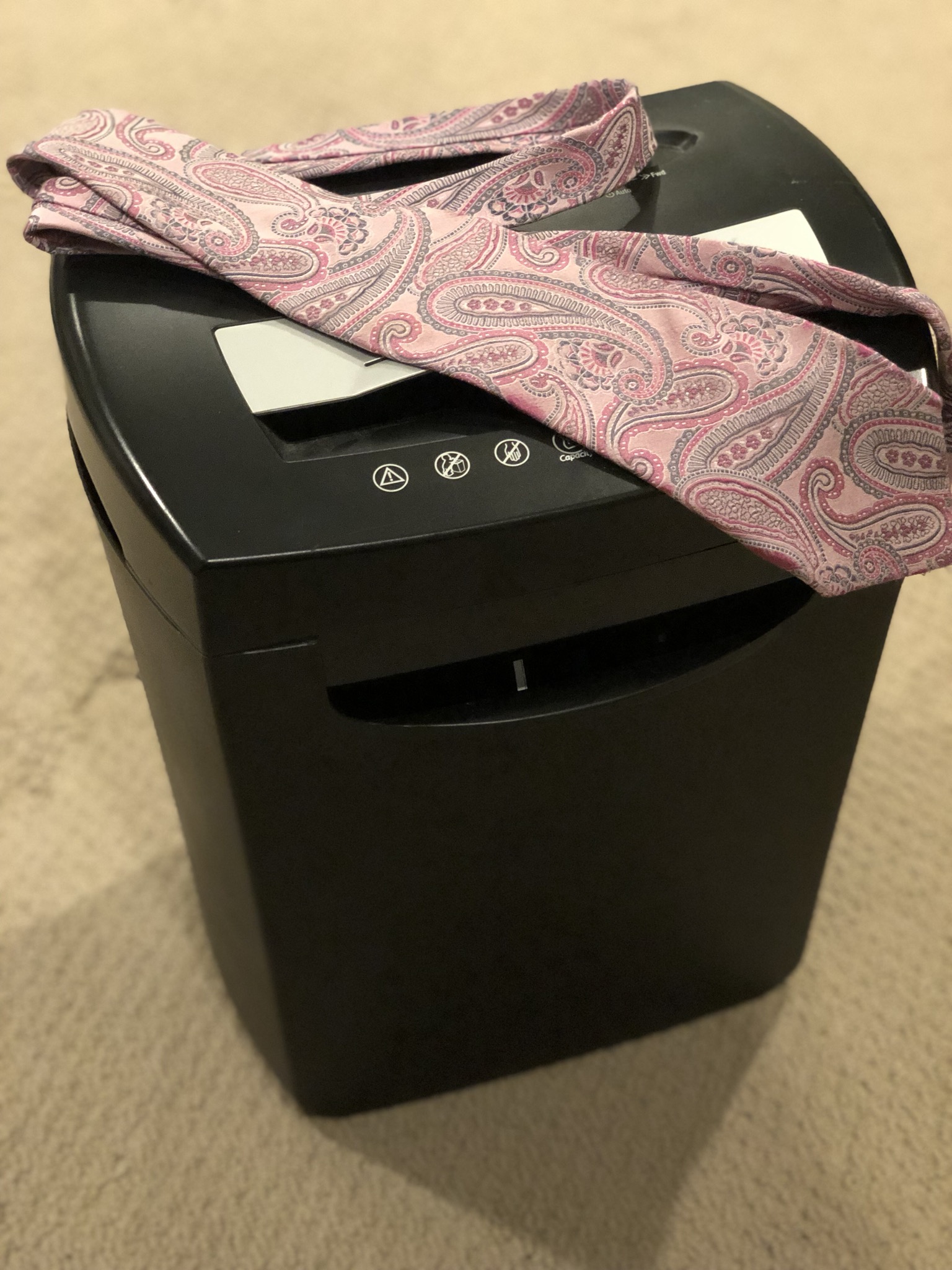
Thanks to a televised Janet Jackson incident some years ago, I now know the proper terminology for my many embarrassing clothing mishaps. On the ‘discomfort’ end, being unprepared for wardrobe malfunctions has resulted in my tie in the toilet while pulling up my pants, a favorite tie in the shredder while still attached to my neck, and not having any tie at a black-tie affair. Toward the other extreme, being unprepared to raise children resulted in many missteps, mistakes, and missed opportunities; and the realization I probably should have waited until age 50 to have them. Of course, I never would have won an arm-wrestling match if that were the case.
I have spent nearly my entire life preparing my body to withstand a career in the profession of arms, to be functionally fit, and to feel good about the way I look when I pass by a full-length mirror naked. I have likewise tried to prepare my mind for critical thinking and vocational success by gaining wisdom and knowledge. And I have spent a good deal of time helping others do likewise. But despite all that, I remain insecure and emotionally unprepared in many ways. These weaknesses sometimes lead to carelessly being drawn into situations I know better to avoid.
Similar to preparing for cold weather by wearing bread bags in your boots, string mittens, and so many layers of winter clothes that there would be little need for side-impact airbags in your car, maybe preparing for life involves putting on a few things. Things like armor…literally and metaphorically; physically and emotionally.

Literature convinces us that in medieval times, knights were powerful symbols of bravery and nobility. But a knight wasn’t a knight overnight. It took years of training, learning, and preparation. The page learned from the squire, who learned from the knight. The knight prepared and affirmed his commitment to knighthood by learning and living chivalrous knighthood ideals such as being brave in battle; loyal to God and King; willing to sacrifice himself for the greater good. And to be merciful, humble, courteous, gracious, and gentle. I read somewhere that ‘not all knights were great men, but all great men were knights!’
Armor provides a great metaphor for the importance of preparation…even better than your mom’s recommendation of always wearing clean underwear in case you’re in an accident. There’s perhaps no better rendering than that of Apostle Paul in the sixth chapter of Ephesians when it comes to preparing for life. He used the battle dress of the Roman soldier as his object lesson, but we can relate in the same way to today’s law enforcement officer or military fighter.

It begins with being ready to stand firm under pressure (also mentioned in a previous article). It is followed by donning the proper equipment (or pieces of armor), each one serving a literal protective purpose and metaphorically representing spiritual, mental, emotional, and physical protections. The first is the ‘belt of truth’; used by the soldier to mount weapons, secure garments, and protect or ‘gird’ the loins and lower body. We all have secrets in dark places we never want revealed. But spiritual truth is needed in a dark world. “In the long run, it matters little what others say or think; it matters a great deal whether or not truth stands.” – Wendell L. Miller
The next few pieces are the breastplate (body armor), protective footwear (practical to the situation), the shield, and the helmet (headgear). Each one representing a facet of spiritual faith and practical physical use…and each defensive in nature. The last piece Paul cites happens also to be the only offensive piece of equipment – the sword (duty weapon).
We could go much deeper here, but I’m sure you get the picture. Sure, you visualized them at least once through all that looking exhausted from battle and caked with dust and dripping with sweat, blood and tears. But think of them all cleaned up, standing tall and proud, crisp and ready for inspection. There’s nothing like a man or woman in uniform. They look pretty damn good, right?! A regular knight in shining armor…

But beware, trusted caballeros. When one puts on all that shiny armor, there may be a certain visual appeal that draws attention that may become a stumbling block for the weak or unprepared. If you are prepared for random notes on your car, impromptu show-ups, and terms of endearment like ‘Muffin Tushy’ or ‘Applesauce’, then not to worry. If you’re not, I guess you’re more like I’ve been much of my life than you care to be and we’re back to paragraphs one through four.
I am my greatest adversary. I need to prepare better. I need the Armor of God.
Get Strong. Be Strong. Stay Strong.
Goldfein, D. L. (2001). Sharing success owning failure-preparing to command in the twenty-first century Air Force. Maxwell AFB, AL: Air University Press.







 Through faith, prayers, amazing staff, rigorous physical and speech therapy, and his incredible resilience, he finally started to look at people, move his lips, and comprehend things again. He gradually improved, spending many months in a wheelchair, followed by a walker (neither of which he uses today). Through God’s amazing healing power, tremendous medical care, his incredible strength, and the loving support of many, he eventually went home. In June 2007, my nephew graduated with honors from high school and later from Michigan Career & Technical Institute.
 My nephew’s life has been a case study in both the strength to endure and the strength to overcome mentioned above. He continues to be one of the strongest people I know.




 eek or so later Chief Rochelle came through my entry control point in the weapon storage area. I again snapped to attention and reported my post: “Sir, Airman Eddy reports ECP Whiskey Three all secure, would you like a post briefing…?” I apologized for my miscue during his last encounter with me. He said all kinds of nice things about me and left with “…you’re going to be Chief Master Sergeant of the Air Force someday.”




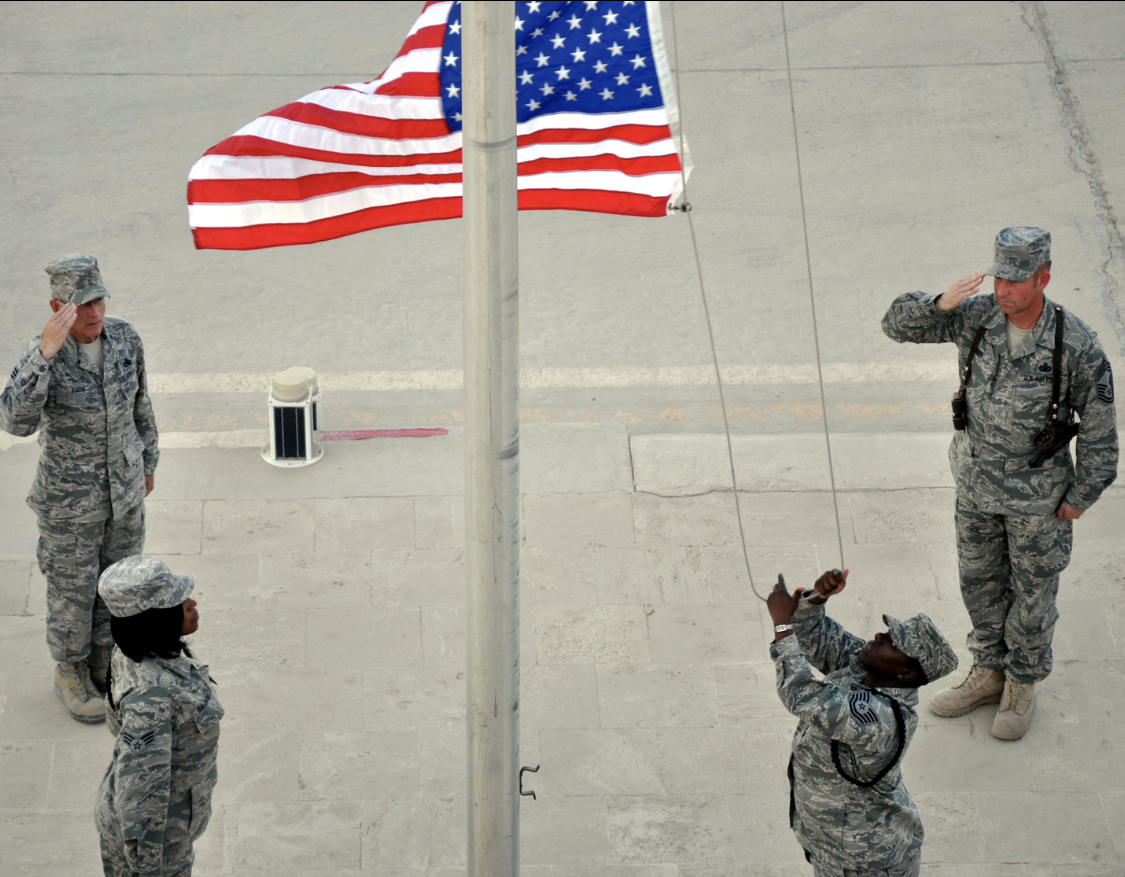
 his book My American Journey, General Colin Powell wrote of his draw to the Pershing Rifles during ROTC as “…the discipline, the structure, the camaraderie, the sense of belonging…” Recognizing the U.S. military as one of America’s greatest opportunities, he eventually ascended to highest military position in our armed forces – Chairman of the Joint Chiefs of Staff. I was a career enlisted guy, and while a non-commissioned officer can never be the chairman of the joint chiefs, many of us in the enlisted corps share the general’s affinity for those things that first attracted him to the Pershing Rifles and that likewise make the profession of arms a unique and honorable vocation.
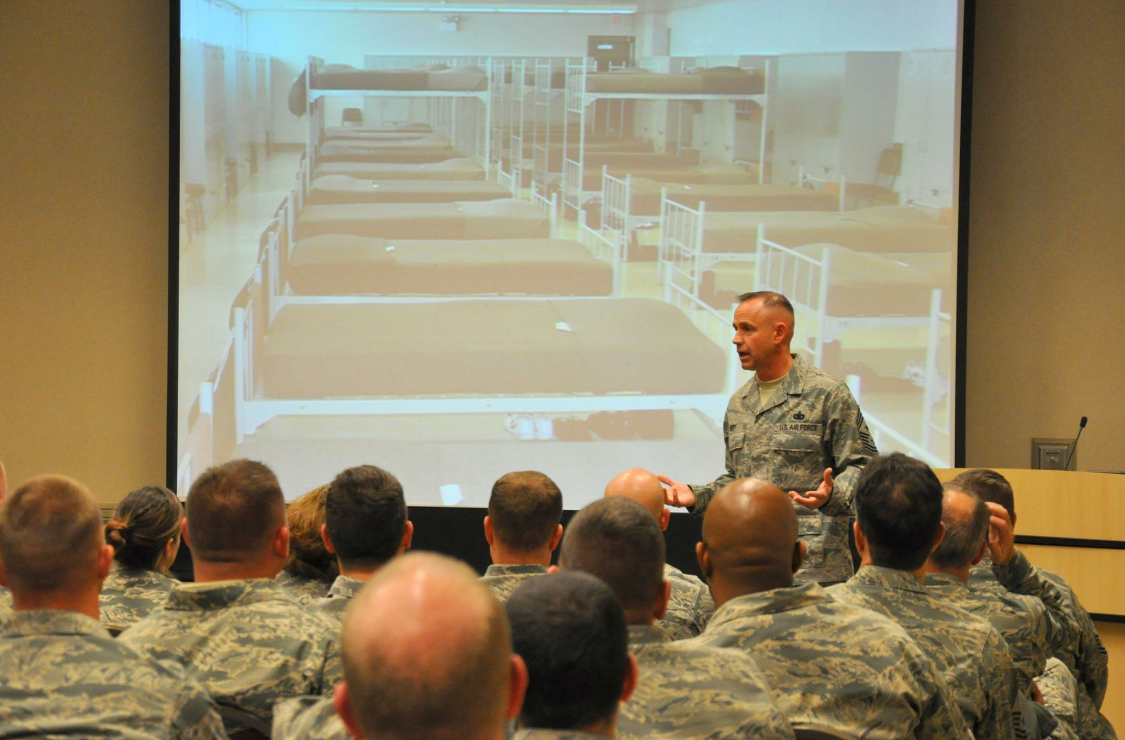
 r taught me a long time ago that creating acronyms could help a simple-minded bloke like me remember things more easily. In fact, I created this one as an outline for a talk and think it’s relevant here: L-T-S-R-B-R. It stands for Leadership through Service, Respect, and Building Relationships. You see, I not-so-uniquely believe excellence in leadership comes through relationships and service to others. I believe real leadership is seen in how people treat others. It involves treating others with dignity and respect; good communication; empowerment; and positive influence.
 People need to know their leaders care both about the mission and about them, and that they are safe to make mistakes as they strive for greatness. If you know someone in a position of authority who leaves a wake of destruction behind them everywhere they go, and they are more concerned with building an empire or advancing their own career than they are taking care of their people, that’s no leader. In fact, that’s just a jerk. My grandma would have said he’s gotten too big for his britches! Using today’s vernacular, she might say it’s an example of the Peter Principle. Still, I’m tempted to believe he was probably a jerk long before rising to his level of incompetence…