Heard. Understood. Acknowledged.
Spend any time around the military, in particular those in more ‘operational’ specialties, and you’ve probably heard prolonged discourse between members in some sort of grunting, identifiable by the root sound “hoo-ah“. This language is ubiquitous across service branches to exclaim, motivate, question, acknowledge, or agree.
From my observations over 32 years of military service, it breaks down something like this: USMC = Oorah or Hoorah; Army = Huah or Hooah; USAF = Hua or Huah.
Admittedly biased, I ascribe to an unverified report the sound and defacto meaning originates from the USAF version wherein operators used “Hua” as a communication pro-word to shorten radio transmission time acknowledging the message was ‘heard, understood, and acknowledged’ (HUA). A Google search will no doubt provide ample contradiction to its origins, and confirm your belief that I am full of hooey (not to be confused with above).

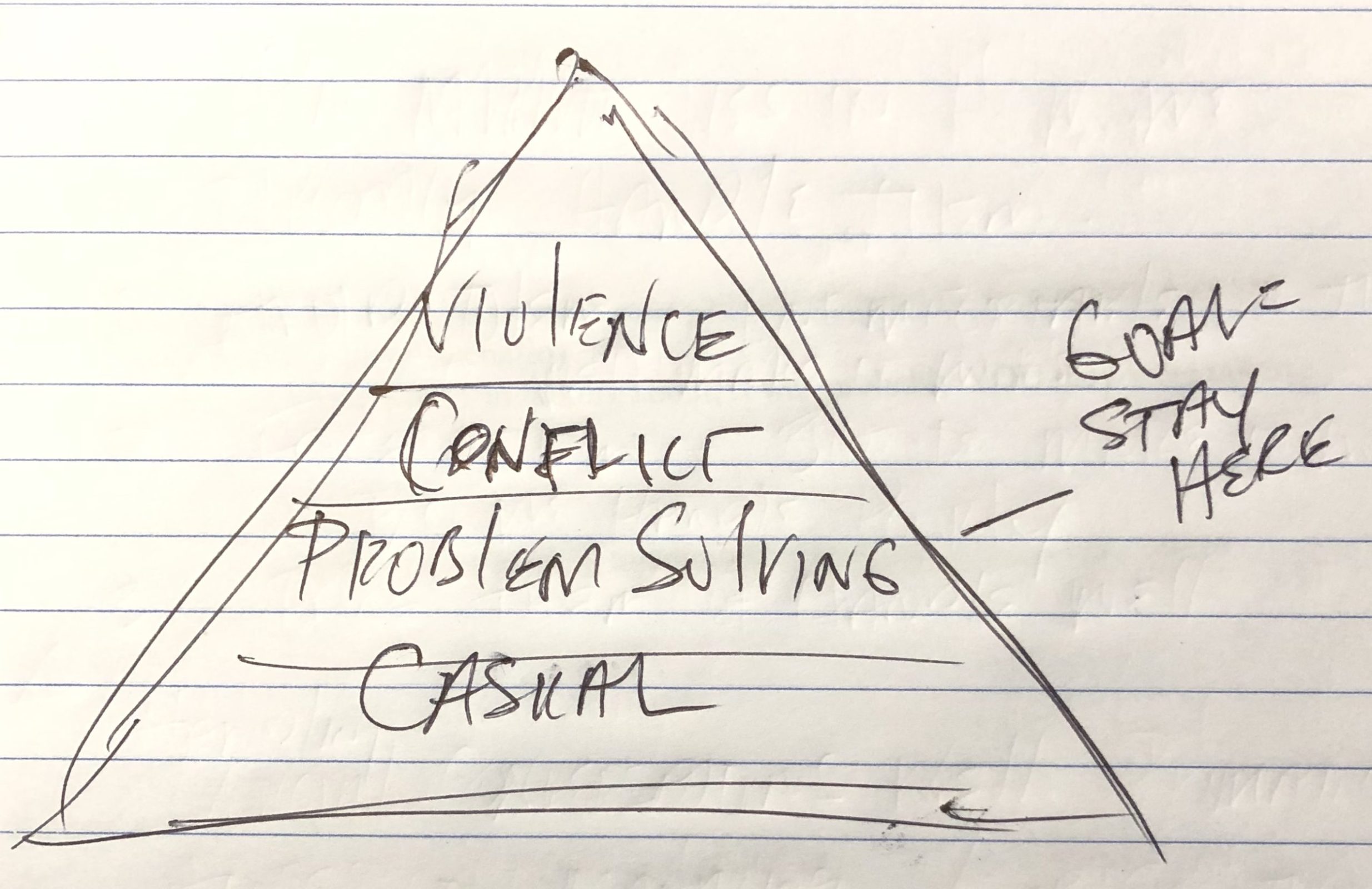
This article is about more than the ad hoc phonic of snake-eaters. It’s about the challenges of interpersonal and organizational communication. And it’s not just a lack of that’s the problem. For instance, Air Force Handbook 33-337, The Tongue and Quill, states that “For communication to be successful, the audience must not only get the message, but must interpret the message in the way the sender intended.” It’s true what my friend Terry always said: it’s not so much what I say, but my delivery that is sometimes the problem. Maybe that’s a problem in organizations, too.
Some are very good at communicating and some are not. Having experienced, present day included, the effects of poor organizational communication, I strive to do the best I can as a leader to be the former. Too often, leaders hold information hostage as if it will somehow weaken their position or undermine their authority if shared with subordinates. While there will always be circumstances not everything can be shared or is known, the vast majority of instances I’ve found it’s better to be direct, transparent, and even over-communicate, than to withhold.
Withholding information causes people to question motives and to create their own narrative – which may or may not be accurate. Rumors, misinformation, and distrust run rampant in organizations where leaders poorly communicate. Those leaders often believe ‘information is power’, and withhold it or wield it like a lever to retain control or to control others. And ‘controlling’ is neither a respected leader characteristic nor an endearing relationship quality.
I’ve found those who operate that way or control others by withholding information are often the same types of people who are insecure in their ability to lead; threatened by others’ success; or underestimate their people. Organizations are made up of bright, mature, competent professionals anxious to help it succeed. They can handle the truth, and respect a leader who tells it like it is…even if it’s bad news or the information might change later.
What they don’t respect, nor appreciate, is being kept in the dark.
Communication is difficult in the best of times, so it’s easy to see how remote-work compounds the problem. Isolation, home internet, diminished ability to read body language or facial expressions, and a host of other issues seldom considered before lockdown challenge today’s communication.
Side note: have you found yourself wondering whether video avoidance on remote meetings is a bandwidth issue, privacy concern, or maybe a matter of having ‘let oneself go’ a bit the last six months working from home?! Admittedly, I have gotten quite comfortable skipping the razor and being minimally attired…no shirt, no shoes, no problem! Except when I’m one minute out from a video call and two floors away from my closet…
Notwithstanding these current isolation, self-care, lack of face-to-face interaction, or technological impacts, even normal communication is impacted by varying expectations of necessity, purpose, and audience. Is it intended to direct, inform, or persuade? Does your audience need to know, or just want to know?
Whatever the intent or purpose, solving organizational communication involves asking myself, “Does everyone in my sphere of influence know or have the information they should about the subject?” If the answer is no, why not?
It wasn’t communicated? They weren’t paying attention? They heard but didn’t listen? They listened but couldn’t hear? Was it lost in translation? How does chain of command or hierarchy factor in? If supervisors are given the information but fail to pass it along to their people, is that the originator’s problem?
What about texting or social media? Have you seen (or been victim to) ‘auto-correct gone bad’?
Just the other day I sent a text intending to make light of a situation, but I failed to insert the ‘eye-roll’ emoji at the end. Just that simple oversight led to an entire day of tension and silent treatment. (Insert eye-roll)
Like other challenges, maybe there’s no easy answer to solving communication problems. But I have found timeliness, openness, transparency, and over-communicating helps.
As does trying hard for my walk match my talk, but extending grace where possible knowing my own propensity to get it wrong sometimes.
Can you hear me now?

Get Strong. Be Strong. Stay Strong.
AFH 33-337, The Tongue and Quill, retrieved from https://static.e-publishing.af.mil/
Heard, Understood, Acknowledged (Video Preview)
Be the Solution, Not the Problem
“What’s your problem?!?” I know you’ve been asked that. Maybe you’ve uttered those words yourself, right before realizing things were about to go south. It’s a legitimate question, but one that’s usually asked in the wrong tone at the wrong time.
I have been asking myself that question for weeks now. While I usually ask it when struggling with my thought life or downswings in my mood or attitude, recently it’s been related to my lack of motivation to write an article. The solution came after talking to my friend. He experienced similar ‘writers block’ as he contemplated the much more significant purpose of drafting his brother’s (and our bandmate’s) eulogy. He tells me he awoke in the middle of the night and just started writing.
History repeated itself in a sense, for as chatting with him was part of my solution here, he likewise helped me move from problem to solution a few years ago when he convinced me to join his band to help me recover from a dark time in my life.
Problem: They needed a drummer (I didn’t play drums).
Solution: Now I do.
It would be easy to swing at the softball floating toward home plate courtesy of the pandemic right now. After all, the current medical-social-political-economic finger-pointing circus supplies ample example; there is no shortage of those who are part of the problem. The good news is, there are just as many who are working hard to be part of the solution.
Besides people who barely passed high school math suddenly knowing more about infectious disease than actual scientists and doctors, people who are part of the problem do things like this: litter; don’t scoop their dog’s poop; procrastinate excessively; blame others; engage in cronyism and favoritism; fail to learn from mistakes; are inconsiderate or entitled (typically related); leave their shopping cart parked where cars are supposed to; pretend to care about people.


They may also fail to recognize (or care) they are part of the problem.
Here are a few ideas to be more of a solution:
- Make room for God in your life. When we rightly understand our own unworthiness compared to the righteousness of a Holy God, we tend to be less of a problem for others.
- Stop claiming the misfortunes of others as your own in some attempt to justify living however you want, or as an excuse for your own bad behavior (cf. peaceful protesting vs. arson, looting, assault, and property destruction). If you want to be a voice and strength for the oppressed or weak, live honorably in such a way that brings about positive change. “Let your light shine before others…” (Matt. 5.16)
- As Dr. Samuel Betances used to say, stop counting heads and start making heads count. Embrace diversity. Enable diversity to foster and thrive by treating everyone with dignity and respect. We are all humans created in the image of God. I don’t believe supporting one race, gender, orientation, or ethnicity has to be to the exclusion, debasement, or detestation of another; you don’t have to be ‘one of’ to ‘stand with’. Fostering a culture of diversity involves being part of the solution.
- Take ownership of your mistakes and shortcomings. Learn from them. Everyone stumbles and falls short. Owning your mistakes is solution-oriented; blaming others makes you part of the problem.
- Pick up after yourself; leave things better than you found them; say please, thank you, and I love you more often; be a good (nobody’s perfect) human being.
- If you see someone struggling or in need – mentally, emotionally, physically, spiritually – help them. Saying to yourself, “It’s not my problem” is part of the problem.
Bystander intervention, being kind, considerate, polite, old-fashioned, or a Good Samaritan. Whatever you call it, consider this: “Suppose a brother or a sister is without clothes and daily food. If one of you says to them, ‘Go in peace; keep warm and well fed,’ but does nothing about their physical needs, what good is it?” That’s from the second chapter of James, where he relates that faith, when not accompanied by works, is dead. Even the secular rock band A Perfect Circle seems to get it. Consider these excerpted lyrics from ‘Talk Talk’:
You’re waiting…On miracles…We’re bleeding out
While you deliberate…Bodies accumulate Sit and talk like Jesus…Try walkin’ like Jesus
Don’t be the problem, be the solution
Faith without works is, Talk without works is
Faith without works is Dead, dead, dead, dead
Try braving the rain, Try lifting the stone, Try extending a hand
Try walkin’ your talk or get the f**k out of my way
The Christian band Casting Crowns likewise addresses not walking the talk in their song ‘If We are the Body’:
But if we are the body, why aren’t his arms reaching? Why aren’t his hands healing? Why aren’t his words teaching? And if we are the body, why aren’t his feet going? Why is his love not showing them there is a way?
There is so much more I need to say about this subject, but I’ve already overstayed my welcome.
If you are a so-called leader who plays favorites, cares only about what benefits you, or creates problems where (or because) none exist, you’re part of the problem. Leadership involves solving problems, not creating them.
Be part of the solution.
Get Strong. Be Strong. Stay Strong.
Lyrics retrieved from https://www.lyricfind.com
Be the Solution (video preview)

Happy July 4th!

Love In Action (Video)

Never Forget (video tribute)
Well That’s Fabulous!
No matter how wholesome or sheltered you are, chances are you’ve seen or heard the abbreviation ‘wtf’. If seeing it here makes you uneasy, read on! I won’t share what is probably the original and most widely-used version (even though many of us have likely asked ourselves a similar question for several weeks now).
A few yeas ago my good friend in the faith, David, asked me a very serious question: “You know what that really stands for, don’t you?” Of course I do. Smirking he said, “Well That’s Fabulous”. I liked it, lol’d, and have used it ever since. It also works better as an article title than Haircuts, Face-masks, Unused Razors, Isolation, Leadership, and Politics.
But since you brought it up, let’s talk about those things.
It’s not lost on anyone that this worldwide pandemic has altered life and is unlike anything we’ve known this generation. Which is perhaps why it’s so disheartening to see how quickly business leaders, politicians, and others have moved from respect, understanding and cooperation to grandstanding, spewing rhetoric, imagining their own expertise, and jockeying for political advantage. There was much promise initially…an opportunity to come together for the good of humanity. But like other catastrophic events that only temporarily unite us, the goodness and spirit of unity left quickly. The honeymoon is over, and we’ve predictably devolved into finger-pointing and politics-as-usual.
But there are bright spots. What has been encouraging are widespread examples of ordinary people doing extraordinary things. Not just frontline workers battling in the trenches, but everyday people finding creative ways to encourage, teach, learn, give, and otherwise make the best of a horrible situation.
Speaking of horrible situations, even if I had two bits, I can’t get a shave and a haircut right now. Not good for a career high-and-tight guy. So I’ve been cutting my own! While it’s no Jerry’s Barbershop masterpiece, it’s not Bob’s Bowl-cut Special, either. Besides, I can always wear a hat until Mark is able to get behind his chair again. Now about that shave…


The start of a fresh month, coupled with being off-the-hook from shaving everyday, gave rise to April’s Stay-At-Home ‘Stache contest with family, friends, and colleagues. The last time I organized a similar activity (Mustache March a few years ago), my daughter nearly disowned me. I think her words were: “Dad, no. You need to shave that off. Never do that again!”
It has been a hoot seeing the creativity of some, the uncooperative genetics of others, and the generosity of all through this frivolous distraction. With judging less than a week away, it’s already the longest I’ve gone without shaving since I joined the military at age 18. Most importantly, over $1000 has been raised to help a hurting family.
Then there’s people like Mike, mentioned last time, who created a website dedicated to positive, educational, entertaining content. He and his family didn’t stop there. They began making cloth face coverings in their home to give people in their community and beyond. Ours arrived in the mail just days after he told me about it. He later sent me a picture of his 93-year-old neighbor, another recipient of the Brady family’s generosity. They even decorated a thank you tree! Reminds me of some other unselfish friends living in south Florida. The world is a better place because of people like them who use their resources to put others first.


Now more than ever leaders, politicians, and citizens alike need to take Theodore Roosevelt’s similar advice to do the best they can, with what they have, where they are. Small businesses are crumbling, along with the life-savings, heart, and soul many poured into them. People are feeling helpless, lonely, and scared. They are hurting, sick, and dying.
This is an unprecedented crisis. Because it is unprecedented, no one person, organization, or government has all the answers or knows a single best solution. It’s time for leaders to be leaders and focus on cooperatively serving others, instead of themselves or their ambitions. Another good friend dropped this brief video gem on the subject recently.
It would be most encouraging if everyone – elected, appointed, and citizen alike, would just stop. Stop wasting time blaming other levels of government or political parties; stop trying to advance their own political or personal agenda; stop arguing about who should have done what and when; stop trying to make others believe you’ve somehow become an overnight expert on infectious disease, economics, supply chains, business, or politics. And start being more caring, compassionate, cooperative, humble, and kind human beings.
I love the heartwarming stories on television and social media. They give me hope that all the junk above will ultimately be consumed by the goodness of human spirit. I encourage you to use this unique and challenging time to pray more, read more, love more, lead more. Serve others, build your faith, strengthen your body, grow closer to friends and family, and renew your mind.
And cut your hair.
Get Strong. Be Strong. Stay Strong.
“Set you mind on things above, not on earthly things.” – Colossians 3.2

March Forth
When I was a child, my dad used to share a riddle about how to get into a house with no windows and no doors. I always chuckled, but never really understood what he was talking about. Unfortunately, its clever meaning was lost on me until I was old enough to figure it out.

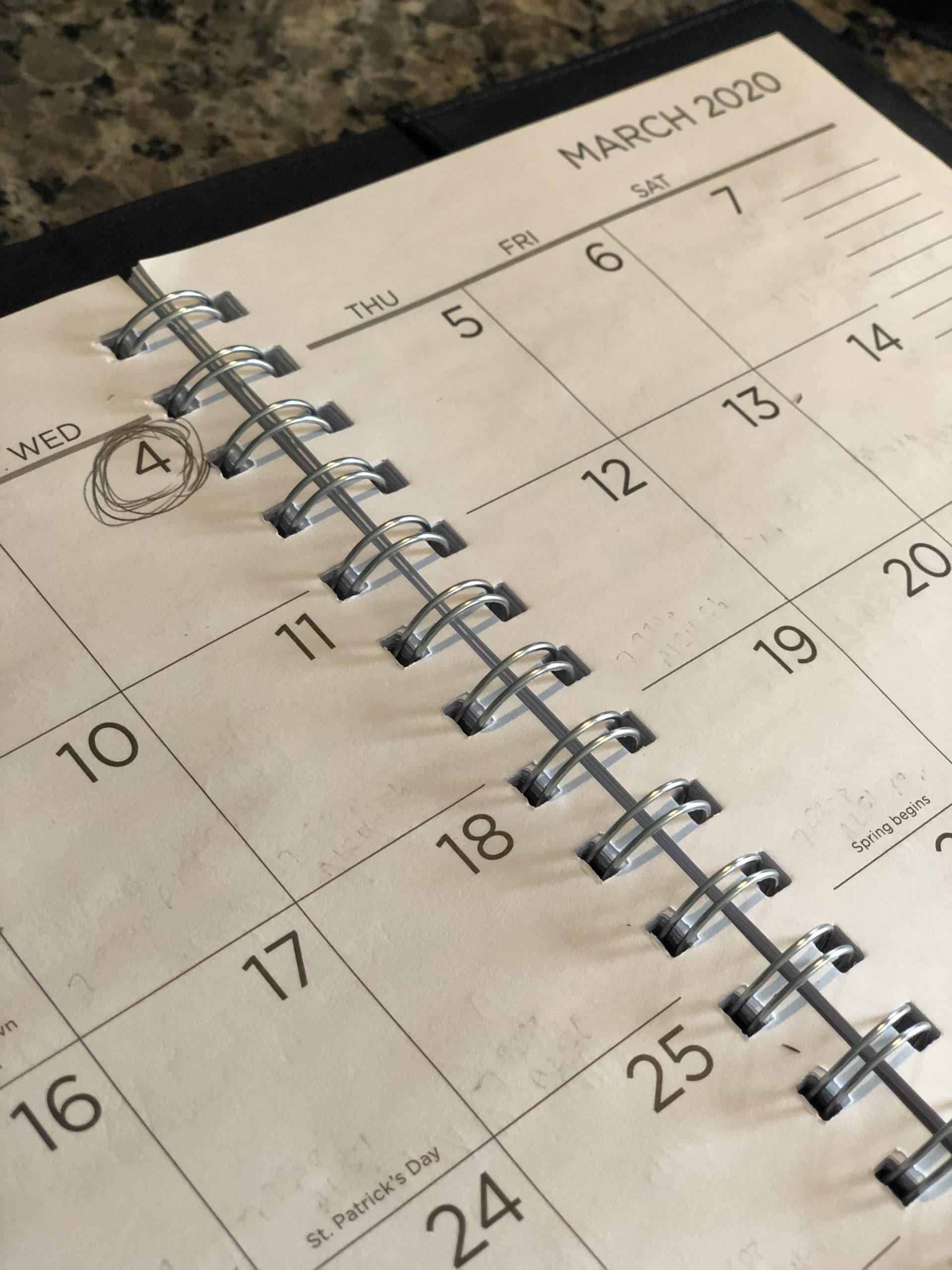
Similarly, it wasn’t until I had served over 20 years in the military this occurred to me: since I entered active-duty service on 3/4/1986, I had officially ‘marched forth’ on March 4th. Sadly, I’m sometimes not so bright.
So what better month than March to march forth toward fulfilling your purpose, achieving your goals, or making the world a better place? What thoughts do you have on how best to do that? Here are just a few that come to mind for me.
Start a blog or some other venture. My good friend, a retired educator and fellow retired senior enlisted leader, recently created Charlie’s School House. It’s a site that provides educational information, interesting content, and links for students (and parents) that may be temporarily at home. I suspect it will endure long beyond this present crisis to serve as a simple resource for encouragement and learning. Well done, Mike.
Start (or ramp up) a personal reading program. In his book On Writing – A Memoir of the Craft, author Stephen King stresses the importance of reading in relation to being a proficient writer when he states “You have to read widely…”. I agree that being well-read is important to being a better writer. And I join many others who recognize the tremendous value of avid reading for other reasons such as gaining knowledge and for entertainment. Reading has made me a better writer, speaker, conversationalist, and communicator for sure! It helps that I love to read. In fact, I typically have a number of books going simultaneously…both print and electronically. While I enjoy some good fiction, most of what I read is biographical or historical, motivational or educational. Right now, besides reading through the Bible in a year, I’m into the pages of The Final Days – The Classic, Behind-the-Scenes Account of Richard Nixon’s Dramatic Last Days in the White House; Meditations – The Philosophy Classic Marcus Aurelius; Decision Points by George W. Bush; Jimmy Buffett A Pirate Looks at Fifty; and The Original Illustrated Sherlock Holmes. Trouble focusing much?
Volunteer. It’s comforting that during times of crisis, people seem to step up and show a much greater sense of community and compassion for others, albeit short-lived. It’s disappointing, however, that it takes tragic events like the terrorist attacks of September 11th or the present COVID-19 pandemic for us to experience this (brief) universal unity. If you need an excuse, use our current situation to do something nice for someone else. Volunteer to help elderly or higher-risk friends or neighbors by delivering groceries to them; participate in a group that helps teach or read to students online; join one or more community, fraternal, or civic organizations in your area and stay engaged after this passes. In other words, get involved with something that not only benefits you, but helps others, too. Service to others is a great way to forget about our own troubles for a while and to realize we’re not alone.
Get your fitness goals back on track. Even if you haven’t completely fallen off the fitness wagon, chances are by now your new year’s resolutions are more like mere suggestions or distant memories. Maybe the forced fitness of basic training doesn’t appeal to you at this time in your life, but perhaps there’s value in cultivating a mindset of constant improvement or committing to a structured workout plan to help revitalize those fitness goals. Besides, if ever there was a time to feel better, it’s now. Physical activity, even low-key/low-impact, can improve your physical, psychological, and emotional well-being.
Will you join me, especially now during this time of worldwide chaos, in marching forth into the future with renewed commitment to making ourselves, our neighbors, and our world a better place? Situations like this equally bring out the best and the worst in people. There’s a lot more each of us can do to show our best…and it all starts by stepping-off with the left foot.

So how do you get into a house with no windows and no doors? You keep running around and around it until you’re ‘all in’. I finally figured it out, Dad. And I’m all in.
Get Strong. Be Strong. Stay Strong.
God is our refuge and strength, an ever-present help in trouble. – Psalm 46.1
King, Stephen (2000). On writing: a memoir of the craft. New York, NY: Scribner.